CLEANING & MAINTENANCE
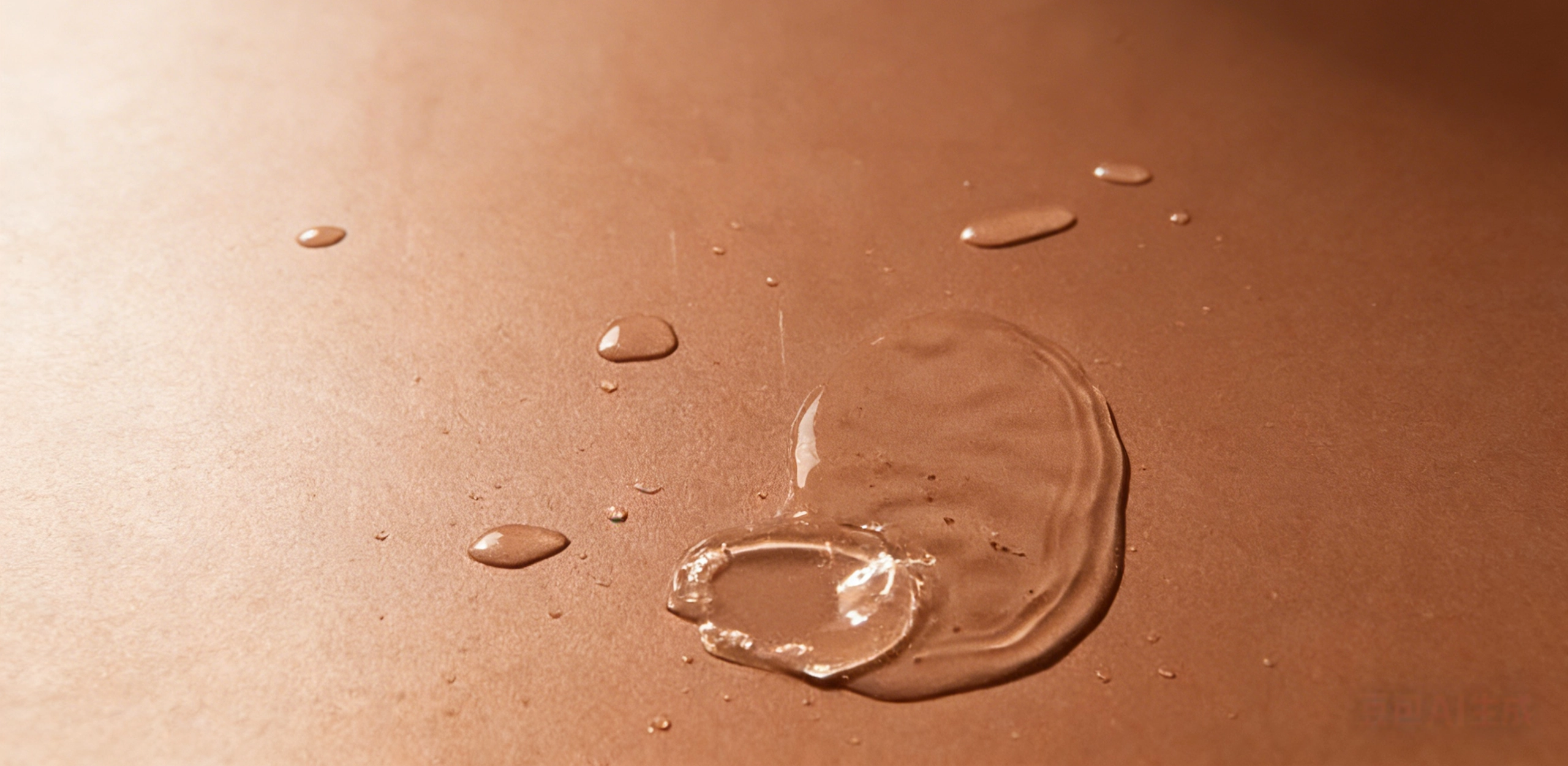
Daily Care Guide
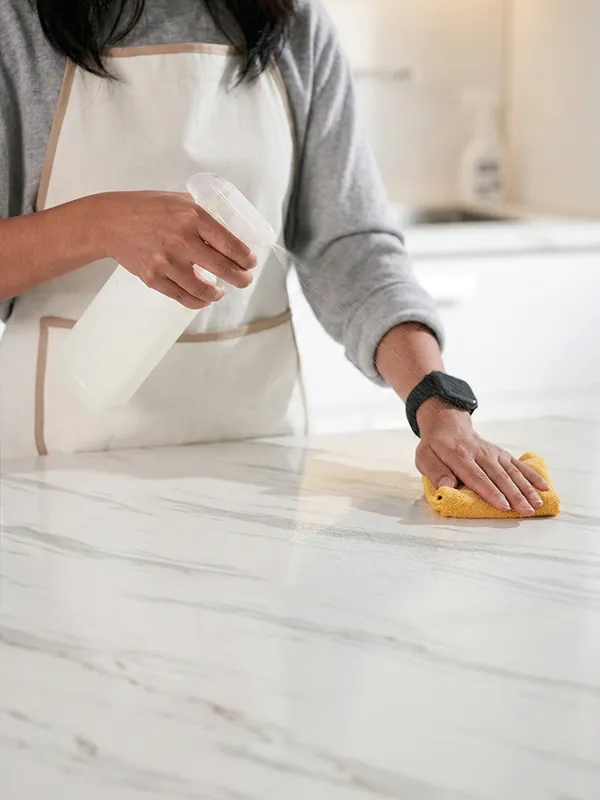
For daily maintenance of your sintered stone table or countertop, a quick wipe-down is often all that is needed.
Simply use a soft cloth or microfiber towel lightly dampened with warm water. Gently wipe the surface to remove dust, food crumbs, and light spills.
This routine helps preserve the pristine appearance of your porcelain countertop or sintered stone dining table between deeper cleanings, ensuring it remains hygienic and visually flawless with minimal effort.
Dealing with Food and Beverage Spills
For optimal care of your stain-resistant sintered stone countertop or table, promptly address food and beverage spills.
Begin by blotting the liquid with an absorbent cloth—avoid rubbing to prevent spreading.
Safe Surface Cleaning Guide
Follow with a damp microfiber cloth to clean the area. For sticky residues, use a solution of warm water with a few drops of mild dish soap, wipe gently, and finish by rinsing with a clean, water-dampened cloth.
This method effectively maintains the pristine condition of your kitchen or dining surface without compromising its finish.
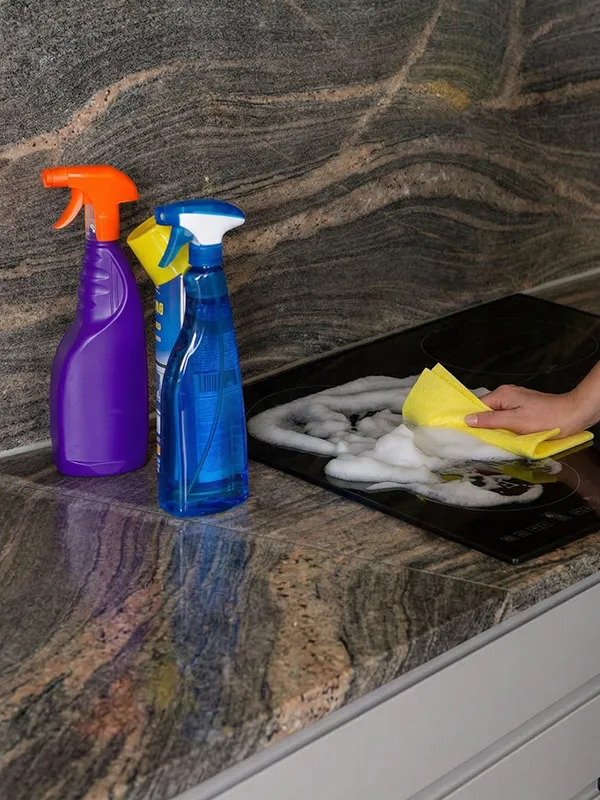
Cleaning Products to Avoid
Stay away from:
•Highly Acidic Cleaners
Examples include strong vinegar-based solutions or concentrated citrus cleaners.
Can etch, dull, or corrode natural stone (like marble or granite), grout, and some metals.
•Highly Alkaline Cleaners
Examples include strong bleach solutions or heavy-duty caustic cleaners.
Can degrade surfaces over time, damage wax finishes, and are often harsh on skin and respiratory systems.
Stay away from:
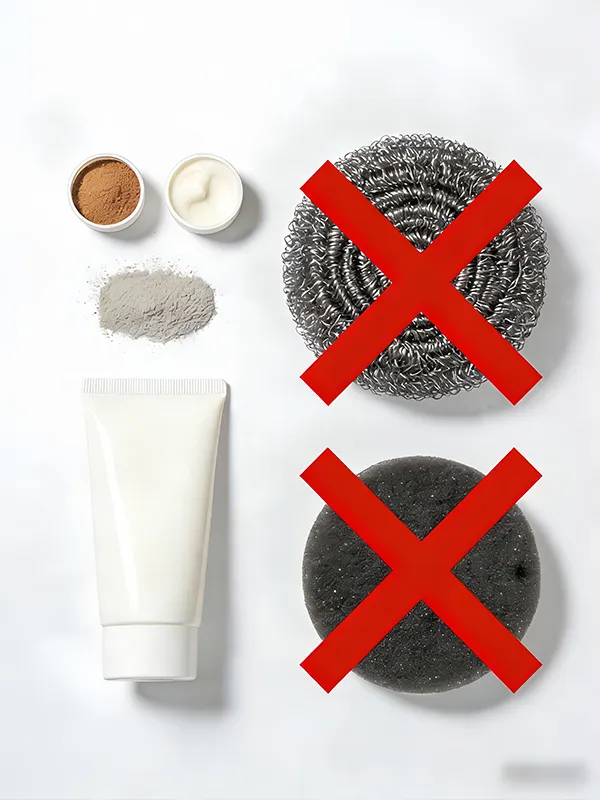
•Abrasive Cleaners
This includes abrasive powders, creams, steel wool, or coarse scouring pads.
Will physically scratch and permanently dull surfaces like stainless steel, glass cooktops, acrylic, and polished finishes.
•Harsh Chemical Solvents
Examples are acetone, paint thinner, or certain nail polish removers.
Can dissolve or damage plastics, varnishes, lacquers, and painted surfaces, and often emit strong, hazardous fumes.
Sintered Stone Table: Long-Term Care & Maintenance Guide
While designed for durability, your table can benefit from occasional professional attention, especially in high-use settings like busy dining areas or commercial spaces.
Scheduling an assessment every few years with a furniture specialist allows for early detection of any subtle issues.
They can provide personalized care advice tailored to your specific table’s condition and usage patterns, ensuring it stays in optimal shape for decades.
Environmental changes affect all surfaces. In humid seasons or climates, prioritize immediately and thoroughly drying the surface after cleaning to prevent potential water spotting.
Conversely, during dry or heated winter months, static may lead to faster dust accumulation, making gentle, frequent dusting with a microfiber cloth a key routine to maintain the pristine shine.
One of the major advantages of sintered stone is its non-porous nature, which eliminates the need for periodic resealing required by natural stone.
If the surface loses some luster over years of heavy use, a deep clean with a cleaner specifically formulated for sintered stone or engineered quartz is often all that’s needed to effectively restore its original brilliance. Avoid generic or abrasive cleaners.
Although highly scratch-resistant, no surface is completely impervious. Adopt simple protective habits to preserve the flawless finish.
Avoid dragging ceramics, cookware, or metal objects with rough bottoms across the table.
We recommend using felt pads under decorative items and employing table runners or placemats as a protective barrier during meals, particularly when serving dishes with abrasive bases. This proactive approach will keep your table looking new.